In the modern days, computers have become an essential gadget for enhancing the productivity and effectiveness of professional as well as personal life. Today’s technological advancements require technology professionals who can help companies to administer their system networks and databases. To cater the demand and aspiration of the budding engineers DVSIET has established the Department of Computer Science Engineering in 2007.
Today the department has a strong team of highly dedicated and committed faculty members. Apart from the syllabus, extra activities like Summer Internships/Expert Lectures/ Workshops/ Seminars are conducted regularly in the area of Python, Java, HTML, CSS, Java Script, Data Science, and Machine Learning, etc. The department is committed to foster a creative and innovative research environment. Rolled-out students are placing well in the renowned companies/MNCs since 2011. Department has a rich record of happy and satisfied alumni.
To develop academic excellence imbibed with ethical and knowledge-based education utilizing the potential of computer science and engineering.

To imbibe creativity, leadership, ethical competence through outcome based learning, co-curricular and extracurricular activities.
To collaborate with industries to develop employability and entrepreneurship skills of the students.
To impart quality engineering education by creating environment that fosters critical thinking, dynamism and innovation to transform them into globally competitive professionals.
To develop technical potential for enhancing innovations, research, and values among the students.
| PO1 | Engineering knowledge: Apply the knowledge of mathematics, science, engineering fundamentals, and an engineering specialization to the solution of complex engineering problems. |
|---|---|
| PO2 | Problem analysis: Identify, formulate, review research literature, and analyze complex engineering problems reaching substantiated conclusions using first principles of mathematics, natural sciences, and engineering sciences. |
| PO3 | Design/development of solutions: Design solutions for complex engineering problems and design system components or processes that meet the specified needs with appropriate consideration for the public health and safety, and the cultural, societal, and environmental considerations |
| PO4 | Conduct investigations of complex problems: Use research-based knowledge and research methods including design of experiments, analysis and interpretation of data, and synthesis of the information to provide valid conclusions. |
| PO5 | Modern tool usage: Create, select, and apply appropriate techniques, resources, and modern engineering and IT tools including prediction and modeling to complex engineering activities with an understanding of the limitations. |
| PO6 | The engineer and society: Apply reasoning informed by the contextual knowledge to assess societal, health, safety, legal and cultural issues and the consequent responsibilities relevant to the professional engineering practice. |
| PO7 | Environment and sustainability: Understand the impact of the professional engineering solutions in societal and environmental contexts, and demonstrate the knowledge of, and need for sustainable development. |
| PO8 | Ethics: Apply ethical principles and commit to professional ethics and responsibilities and norms of the engineering practice. |
| PO9 | Individual and team work: Function effectively as an individual, and as a member or leader in diverse teams, and in multidisciplinary settings. |
| PO10 | Communication: Communicate effectively on complex engineering activities with the engineering community and with society at large, such as, being able to comprehend and write effective reports and design documentation, make effective presentations, and give and receive clear instructions. |
| PO11 | Project management and finance: Demonstrate knowledge and understanding of the engineering and management principles and apply these to one’s own work, as a member and leader in a team, to manage projects and in multidisciplinary environments. |
| PO12 | Life-long learning: Recognize the need for, and have the preparation and ability to engage in independent and life-long learning in the broadest context of technological change. |
| PEO1 | To empower students with theoretical and practical knowledge in the domain of Computer Science Engineering for leading successful career as engineer in industries, pursuing higher studies or entrepreneurial endeavors. |
|---|---|
| PEO2 | To develop the ability to critically think, analyze and make decisions for offering techno-commercially feasible and socially acceptable solutions to real life problems in the areas of computer Science. |
| PEO3 | To instill professional work ethics and social responsibilities so that they can contribute to the betterment of the society as committed technical personnel. |
| PEO4 | To imbibe lifelong learning, professional and ethical attitude for embracing global challenges and make positive impact on environment and society. |
| PSO1 | Capable of identifying, understanding, analyzing and developing computer programs in the areas related to algorithms, system software, multimedia, web design, data analytics, and networking for real world and research problems. |
|---|---|
| PSO2 | Capable of applying standard practices and strategies in project development using open-ended programming environments to deliver a quality product for business success. |
| PSO3 | Capable to gain knowledge to employ modern computer languages, environments, and platforms in creating innovative career paths to be an entrepreneur with ethical values. |
Outcome Based Education
Highly Qualified & Research oriented Faculty
Industry oriented learning through Technology Groups
Excellent infrastructure & computing facilities
Excellent placement records
Strong Alumni & industry Interaction
Well defined student counseling and mentoring process
Excellent academic results
Strong focus on placement preparation & continuous assessment
Showcase of Student’s innovative working project models at Technophilia
Research orientation for both faculty & students
Focus on programming hands-on
Motivation for Self learning initiatives
Coverage of student articles & department activities through Newsletter
Well defined teaching-learning process with use of technology based teaching methodologies
Student’s participation in National level Hackathons
Online Teaching Assistance through Video Lectures
Excellent environment for all round development of students under student chapters & clubs
Question Papers based on Bloom’s Taxonomy.
Separate assignments for Slow, Average and Advanced Learners.
MOU Signed with C-DAC and ICT Academy
Students participated in workshop on Data Science and Machine learning at IIT- Delhi
Students presented papers in different national level conferences
The objective of B.Tech. program in Computer Science Engineering is to equip students to take plunge in careers enmeshing innovation and problem solving using computational techniques and technologies, to undertake advanced studies for research works or establish their own start-ups. The institute is imparting knowledge, values and providing students an excellent learning experience through research & innovation in the field of Artificial Intelligence, Machine Learning, Advance Algorithm, Web Development, Cyber security and other areas that will meet the aspirations of the budding engineers. We are providing a real industry environment as well as live projects to the students so that they can get the placements in renowned companies/ MNCs at the attractive package. Learning is a continuous process and does not end with the acquisition of a degree, especially because steady and rapid advances in computing technologies shorten the life of tools and techniques prevalent today.
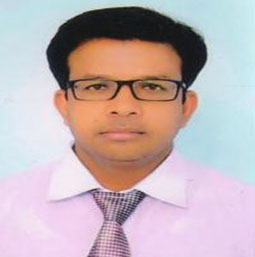
Assistant Professor
Department: Computer Science Engineering
Qualification: M.Tech. (CSE) B.Tech. (CSE)
Experience: 14 Years
Expertise: Web Technology & Python Programming
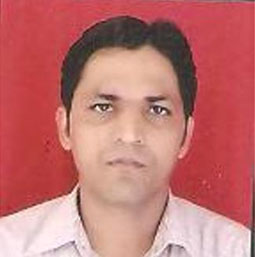
Assistant Professor
Department :
Computer Science and Engineering
Designation : Assistant Professor
Department :
Computer Science and Engineering
Department : Computer Science and Engineering
Qualification : M TECH (CSE)
Total Experience : 17 Years (Teaching)
Expertise : Compiler Design, Theory of Automata and Formal Languages, DSTL
Certification : NPTEL certification in Theory of Automata and Formal Languages & DSTL
Publication : 10(02 international, 01 national, 07 conferences)
Designation: Teaching Assistant
Department :
Computer Science and Engineering
Department : Computer Science and Engineering
Qualification :
M.Sc (Math), MCA, M TECH (IT) - Ph.D (PURSUING)
Total Experience : 16 Years (Teaching)
Expertise :
Computer Networks, C -programming, Operating System, Software Testing
Publication : National conferences- 04
Department :
Computer Science and Engineering
Department :
Computer Science and Engineering
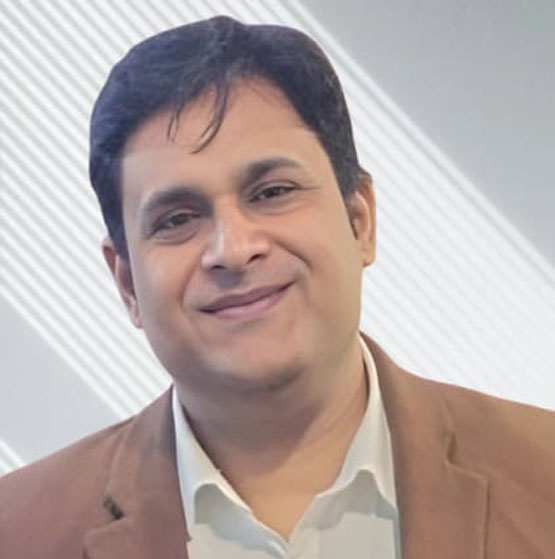
Department : Computer Science and Engineering
Qualification : Ph.D (CSE), MBA, M.Tech, B.E (CSE)
Total Experience : 28 Years (Institute-23 yrs and Industry- 5 yrs)
Expertise :
Operating System, Software Engineering, MIS, Cyber security
Publication :
-International Journals - 07
International conference-04
National conference-30
Assistant Professor
Department :
Computer Science and Engineering